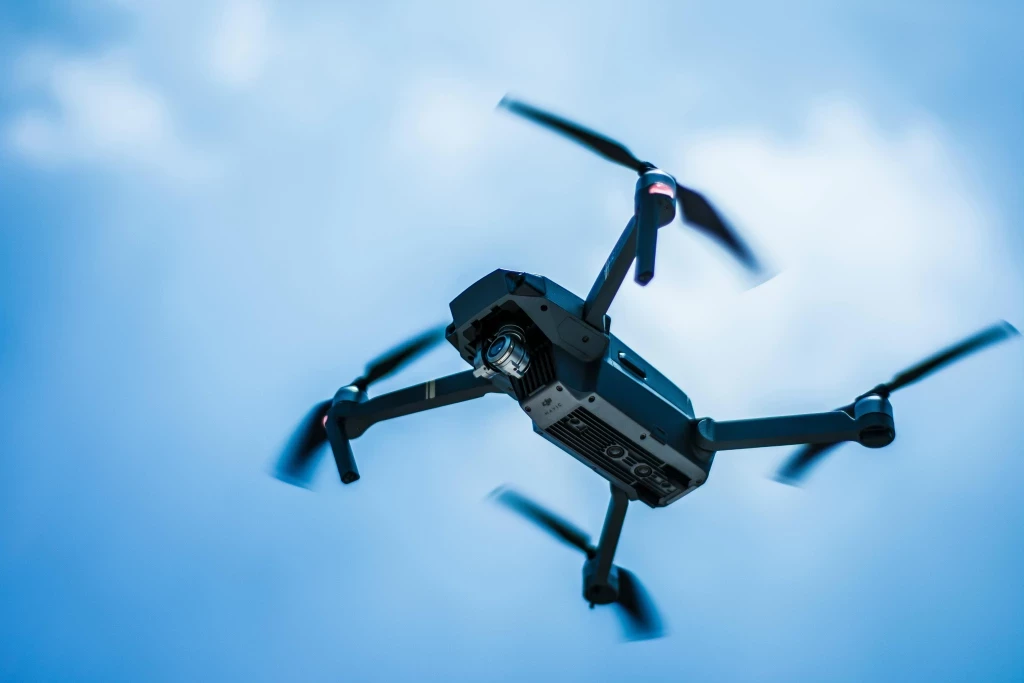
From their origins as military tools to their current role as versatile helpers across industries, drones have undergone a remarkable transformation.
The journey began in the early 20th century with the first pilotless aircraft, like the British “Aerial Target” in 1917 and the Kettering Bug in World War I, which laid the foundation for unmanned aerial vehicles (UAVs).
Over the decades, drones evolved from reconnaissance and combat roles during World War II to becoming indispensable in civilian sectors.
The consumer drone revolution took off in the early 2010s with models like the Parrot AR Drone and DJI Phantom, making aerial photography, videography, and recreational flying accessible to the public.
Today, drones serve far beyond entertainment—they are critical tools in agriculture, construction, emergency response, environmental conservation, and logistics.
Farmers use drones to monitor crop health and optimize resource use, increasing yields while reducing waste.
In disaster zones, drones equipped with thermal imaging rapidly locate survivors and assess damage, enabling faster and safer rescue operations.
Construction companies deploy drones for surveying and infrastructure inspection, improving safety and efficiency.
Even public safety agencies leverage drones for surveillance, firefighting, and medical deliveries to hard-to-reach areas.
Looking ahead to 2025, drones are becoming smarter with advanced AI, capable of autonomous decision-making, object recognition, and environmental prediction. This leap forward will enhance their effectiveness in wildlife monitoring, security, and precision agriculture, further embedding drones into daily life and industry.
However, this rapid adoption also raises important ethical and privacy considerations, necessitating thoughtful regulation and social responsibility.
The drone revolution is reshaping how we work, protect, and connect with our environment—ushering in a future where the sky is not the limit but a new frontier for innovation and service.


